
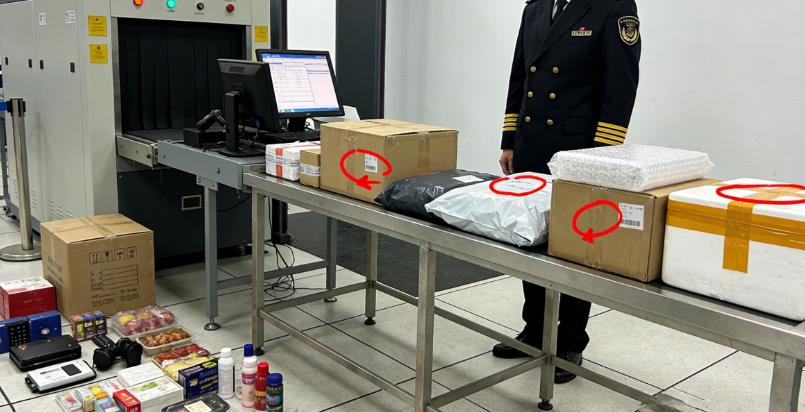
It’s 6 AM on a Tuesday, and my phone buzzes with a text from my customs broker that makes my stomach drop: “Your container’s been pulled for intensive inspection at LAX. CBP has questions about the packaging and product descriptions.” I freeze—this is exactly the scenario every importer dreads. That container of bamboo kitchenware was supposed to land in my 3PL warehouse by Friday to fulfill Amazon Prime orders, and now? Intensive inspections can take 3-7 days (if you’re lucky) and cost thousands in demurrage fees. As I scramble to dig up invoices and product specs, I’m reminded of the hard lessons I’ve learned over 5 years of importing: CBP doesn’t randomly pick shipments to inspect—they follow clear red flags in packaging, product names, and declarations.
This guide isn’t just a list of “do’s and don’ts”—it’s the survival manual I’ve built from my own inspection nightmares and the war stories of my importer mastermind group. We’re talking about the specific packaging choices that scream “inspect me,” the vague product names that trigger suspicion, and the declaration mistakes that turn a routine clearance into a bureaucratic nightmare. Whether you’re importing electronics from China, textiles from Vietnam, or home goods from Europe, this will teach you how to pre-empt CBP scrutiny, pass inspections smoothly, and keep your shipments on track in 2026’s stricter customs landscape.
First, let’s get one thing straight: CBP’s job is to protect U.S. borders from counterfeits, unsafe products, underpaid tariffs, and illegal goods. They process over 25 million containers a year, so they rely on “risk profiling” to decide which shipments to pull aside. That means they’re looking for patterns—packaging that’s inconsistent with the declared goods, product names that are too vague or misleading, and declarations that don’t add up (e.g., a $5 “luxury handbag” or a “gift” worth $10,000). In 2026, their tools are smarter than ever—AI-powered scanning that cross-references your paperwork with global trade databases, and stricter penalties for misdeclarations (fines up to $10,000 per violation). The goal isn’t to avoid inspections entirely—it’s to make your shipment look “low-risk” so CBP has no reason to flag it.
Packaging Red Flags: What Makes CBP Stop Your Shipment
Packaging is the first thing CBP sees when your container arrives, and it’s often the reason shipments get pulled. I learned this the hard way in 2024, when I imported a batch of ceramic mugs with packaging that screamed “counterfeit.” The boxes were flimsy, had no brand labels, and the product descriptions on the outside (“ceramic cup”) didn’t match the detailed specs on my commercial invoice. CBP pulled the shipment for inspection, and even though the mugs were legitimate, the packaging delay cost me $4,200 in demurrage and missed sales. Now, I obsess over packaging details—and so should you.
The biggest packaging red flag is inconsistency. If your commercial invoice says you’re shipping “premium bamboo cutting boards” but your boxes are generic, unbranded, and look like they’re holding cheap plastic goods, CBP will want to check. They’re trained to spot mismatches: a box labeled “fragile” that’s not padded, a shipment of “electronics” in boxes that are too light, or packaging that’s been tampered with (e.g., re-taped boxes, mismatched labels). I had a colleague import wireless headphones in plain brown boxes with no brand logos, even though his invoice listed a well-known brand. CBP assumed they were counterfeits, seized the shipment, and it took him 3 weeks to prove legitimacy—by then, his product launch was ruined.
Another packaging no-no is missing or incomplete labeling. U.S. law requires certain labels on imported goods: country of origin (“Made in China/Vietnam/India”), product safety labels (e.g., FCC compliance for electronics, CPSIA labels for children’s products), and brand names (if applicable). If your packaging is missing these, CBP will pull your shipment. Last year, I forgot to add CPSIA labels to a batch of children’s bamboo utensils—even though the products were safe and compliant. CBP held the shipment until I could send replacement labels, which took 5 days and cost $1,800 in storage fees. Now, I have a checklist for labels that I review before every shipment leaves the factory.
Overpackaging or underpackaging is also a red flag. If you’re shipping small, lightweight items (e.g., jewelry) in huge boxes filled with excessive padding, CBP might suspect you’re hiding something. Conversely, if you’re shipping heavy, fragile items (e.g., glassware) in flimsy boxes with no padding, CBP will worry about damage—and might pull the shipment to check if the goods are as described. I once imported a batch of glass vases in boxes that were too small, with minimal bubble wrap. CBP pulled the shipment not because they suspected foul play, but because they thought the vases might be damaged and wanted to verify. The inspection was quick, but the delay still cost me $800.
Finally, generic or misleading packaging labels are a problem. Avoid vague labels like “miscellaneous goods,” “gift items,” or “personal effects” if you’re shipping commercial products. CBP hates ambiguity—they want to know exactly what’s in each box. I had a friend import a mix of home goods (towels, dish soap, candles) and label the boxes “household items.” CBP pulled the shipment to verify that none of the goods were restricted (e.g., the dish soap had proper EPA labels), and the inspection delayed his shipment by 3 days. Now, he labels each box with specific contents (“12 cotton towels – white”) and cross-references them with his packing list.
Product Name Mistakes: Vague or Misleading Names That Trigger Scrutiny
Your product name on the commercial invoice and packing list is one of the most important details for CBP. A vague or misleading name is a surefire way to get your shipment flagged. I made this mistake early in my career, when I imported “bamboo kitchen tools” and listed them as “wooden utensils” on my invoice. CBP couldn’t tell if they were bamboo (which has a 4.9% tariff) or hardwood (which has a 6.5% tariff), so they pulled the shipment to inspect. Even though I could prove they were bamboo, the delay cost me $2,500. Now, I use exact product names that match the Harmonized Tariff Schedule (HTS) code I’m using.
The golden rule for product names is: be specific, not vague. Avoid terms like “miscellaneous,” “assorted,” “gift set,” or “accessories” without details. Instead of “electronics accessories,” write “USB-C charging cables (6ft, 20W)”; instead of “beauty products,” write “organic coconut oil face moisturizer (5oz)”; instead of “home decor,” write “hand-painted ceramic vases (8in tall)”. CBP uses product names to classify your goods and assess tariffs—if they can’t tell what you’re shipping, they’ll pull it for inspection. I had a seller in my mastermind group list “fashion items” on his invoice for a shipment of women’s dresses. CBP couldn’t determine the fabric type (cotton vs. polyester, which have different tariffs) and held the shipment until he provided detailed specs—costing him $3,000 in lost sales.
Misleading product names are even worse. If you’re shipping a generic brand of headphones but call them “Apple AirPods alternatives,” CBP might suspect counterfeiting. If you’re shipping plastic cups but call them “glass-like tumblers,” CBP will want to verify the material. I had a colleague import reusable silicone food bags and label them “eco-friendly plastic bags” on his invoice. CBP thought he was misdeclaring plastic as eco-friendly to avoid tariffs, pulled the shipment, and it took him 2 days to prove the material was silicone. The delay was small, but the stress and extra fees weren’t worth it.
Another product name mistake is using brand names incorrectly. If you’re selling a generic product that’s compatible with a brand (e.g., “compatible with iPhone chargers”), that’s fine—but if you use the brand name without permission, CBP will suspect counterfeiting. I once imported phone cases that were compatible with Samsung phones and listed “Samsung phone cases” on my invoice. CBP pulled the shipment, assuming they were counterfeit Samsung products, and I had to provide proof that they were generic and compatible—costing me $1,500 in fees. Now, I write “phone cases compatible with Samsung Galaxy S24” to avoid confusion.
Declaration Mistakes: The Costly Errors That Get Your Shipment Seized
Declarations—including value, quantity, and HTS code—are the most critical part of your customs paperwork. A single mistake here can lead to seizure, fines, or even a ban from importing. I’ve seen importers lose entire shipments because they underdeclared value or used the wrong HTS code. In 2025, I made a declaration mistake that still makes me cringe: I imported a batch of bamboo furniture and used the wrong HTS code (for “bamboo crafts” instead of “bamboo furniture”). The tariff rate was lower for crafts, so CBP suspected I was underpaying and pulled the shipment for a full inspection. I had to pay back tariffs plus a $2,800 fine, and the delay cost me $5,000 in lost sales. Now, I double-check HTS codes with my customs broker before every shipment.
The biggest declaration red flag is underdeclaring or overdeclaring value. Underdeclaring (saying your goods are worth less than they are) is illegal and can lead to fines, seizure, or criminal charges. CBP cross-references your declared value with market prices—if you’re selling “luxury leather handbags” for $10 each, they’ll know something’s wrong. I had a friend import designer-inspired handbags and declare them at $5 each to avoid high tariffs. CBP seized the entire shipment, fined him $15,000, and banned him from importing for 2 years. Overdeclaring is less common, but it’s still a problem—if you declare a shipment of $20 t-shirts as $100 each, CBP might suspect you’re money laundering or importing counterfeits. The rule is simple: declare the transaction value (the price you paid the supplier) accurately.
Another declaration mistake is using the wrong HTS code. The HTS (Harmonized Tariff Schedule) is a 10-digit code that classifies your goods and determines the tariff rate. Using the wrong code can lead to underpaying or overpaying tariffs—and CBP will flag it. For example, bamboo cutting boards fall under HTS code 4419.20 (bamboo kitchenware), while bamboo crafts fall under 4421.99. The tariff rate for 4419.20 is 4.9%, while 4421.99 is 6.5%—a small difference, but enough to trigger an inspection if CBP notices. I use the CBP’s HTS search tool (hts.usitc.gov) and consult my customs broker to confirm codes—never guess.
Incomplete or inconsistent quantity declarations are also a problem. If your commercial invoice says you’re shipping 500 units, but your packing list says 498, or your container weight doesn’t match the quantity, CBP will pull your shipment. I once had a factory ship 495 bamboo utensils instead of 500 (a mistake), but my invoice still said 500. CBP counted the units during inspection, noticed the discrepancy, and held the shipment until I could provide a corrected invoice—costing me $1,200 in storage fees. Now, I require the factory to send a final packing list with photos of the counted units before the shipment leaves.
Finally, declaring “gift” or “sample” incorrectly is a major red flag. If you’re shipping goods for resale, you can’t declare them as “gift”—that’s illegal. Samples are only exempt from tariffs if they’re for testing or promotion, not for resale, and they must be marked “sample—not for resale.” I had a colleague import 100 “samples” of his product to sell at a trade show, but he declared them as “gift” to avoid tariffs. CBP seized the shipment, fined him $3,000, and he missed the trade show. Now, he declares samples correctly and includes a letter explaining their purpose.
2026 Importer Self-Check Guide: How to Make Your Shipment Low-Risk
Now that you know the red flags, let’s talk about how to pre-empt CBP scrutiny with a self-check guide I use for every shipment. This isn’t a list—it’s a routine that takes 15 minutes and has saved me from countless inspections.
First, audit your packaging for consistency. Lay out a sample box and compare it to your commercial invoice: Does the packaging match the product’s value (premium goods should have premium packaging)? Are all labels present (country of origin, safety labels, brand names)? Is the packaging intact (no tampering, no mismatched tape)? If you’re shipping branded goods, make sure the brand logos are consistent with the manufacturer’s official packaging. I once caught a factory using outdated brand logos on my boxes—fixing it before the shipment left saved me from an inspection.
Second, verify your product names are specific and HTS-compliant. Take your commercial invoice and cross-reference each product name with your HTS code. Does the name accurately describe the product (e.g., “bamboo cutting board 12in” instead of “wooden kitchen tool”)? Avoid vague terms, brand names you don’t own, and misleading descriptions. I use a tool called Tariff Tiger to check if my product names match common HTS classifications—if the tool flags a name as “vague,” I rewrite it.
Third, double-check your declarations for accuracy. Confirm that your declared value is the exact transaction value (what you paid the supplier), your HTS code is correct (consult your broker), and your quantity matches your packing list and container weight. Use CBP’s ACE (Automated Commercial Environment) portal to run a pre-clearance check—this tool lets you submit your paperwork electronically and get feedback on potential issues before your shipment arrives. I run every shipment through ACE now, and it’s caught two declaration mistakes that would have led to inspections.
Fourth, ensure all required documents are complete and consistent. Your commercial invoice, packing list, bill of lading, and ISF (Importer Security Filing) must all match—same product names, quantities, values, and HTS codes. A single discrepancy (e.g., invoice says 500 units, packing list says 499) is enough to trigger a flag. I have a shared folder with my broker where we review all documents together before the shipment leaves—this extra step has saved me from countless headaches.
Fifth, check for restricted or prohibited goods. Some products require extra documentation (e.g., FDA approval for food items, FCC compliance for electronics, USDA permits for agricultural goods). If you’re shipping these, make sure you have all required permits and certifications. I import bamboo food products, which require FDA compliance—now, I include a copy of my FDA registration with every shipment, even though CBP doesn’t always ask for it. It’s a way to show I’m compliant and low-risk.
Real-World Inspection Stories: What Happens When You Get Flagged
I’ve collected dozens of inspection stories from my importer group—here are two that illustrate the cost of cutting corners, and how to avoid their mistakes.
First story: A seller named Ryan imported wireless earbuds from China. He used generic packaging with no brand labels, listed the product name as “electronics accessories” on his invoice, and underdeclared the value (saying they were worth $8 each instead of $15). CBP flagged the shipment for all three red flags: inconsistent packaging, vague product name, and underdeclared value. They seized the shipment, assuming it was counterfeit, and Ryan had to hire a lawyer to prove legitimacy. It took 6 weeks to get the shipment released, and he paid $12,000 in fines, legal fees, and demurrage. By then, his competitors had launched similar products, and he lost $30,000 in potential sales. The lesson: Don’t cut corners on packaging, product names, or declarations—even if you think you’ll save money.
Second story: A seller named Maya imported organic cotton clothing from India. She used branded, eco-friendly packaging that matched her product’s value, listed specific product names (“organic cotton women’s t-shirt – size S-XL”), declared the correct value, and used the right HTS code. Her shipment was pulled for a random inspection (yes, they do happen), but because her paperwork was complete and consistent, CBP cleared it in 4 hours. She didn’t pay any extra fees, and her shipment arrived on time. The lesson: Even if you get inspected, good paperwork and packaging will speed up the process.
Final Thoughts: Inspections Are Inevitable—But Delays Are Not
I’ve had 7 shipments inspected in 5 years of importing. Some were random, but most were because of small mistakes I could have avoided (vague product names, missing labels, declaration errors). The key takeaway isn’t to fear inspections—it’s to make your shipment look so “low-risk” that CBP has no reason to flag it. In 2026, with CBP’s smarter tools and stricter penalties, this is more important than ever.
The cost of getting flagged is too high: demurrage fees, storage fees, lost sales, fines, and even seizure. But with the right packaging, specific product names, accurate declarations, and complete paperwork, you can minimize the risk. I now spend 15 minutes on my self-check guide before every shipment, and it’s saved me tens of thousands of dollars.
If you’re new to importing, don’t try to figure this out alone. Hire a customs broker who specializes in your product type—they’ll help you with HTS codes, packaging requirements, and documentation. Join importer groups (I recommend the American Association of Exporters and Importers) to learn from others’ mistakes. And never assume that “good enough” is enough—CBP’s standards are high, and you need to meet them.
At the end of the day, importing is a game of details. The difference between a smooth clearance and a nightmare is in the packaging labels, the product names on your invoice, and the accuracy of your declarations. Invest the time to get these right, and you’ll save yourself from the stress, fees, and lost sales that come with CBP inspections.
And if you do get flagged? Stay calm, respond quickly, and have all your documents ready. CBP just wants to verify your goods are legitimate and compliant—if you can prove that, they’ll release your shipment.
Here’s to smooth clearances, on-time shipments, and profitable imports in 2026!
Leave a Reply