
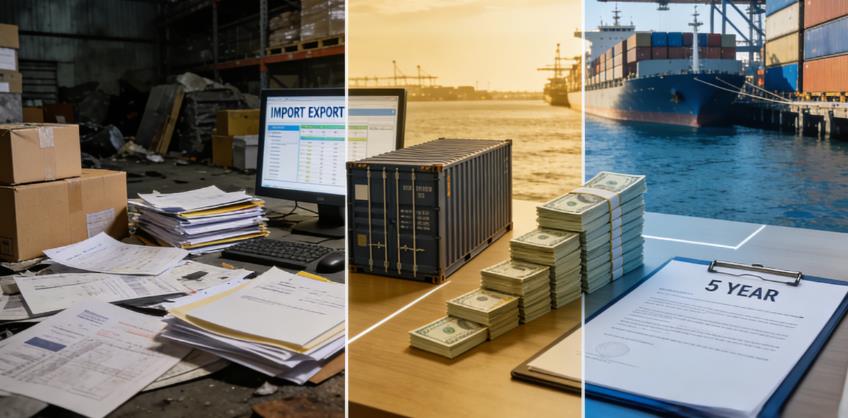
Let me set the scene: It’s 2018, I’m sitting in my tiny Brooklyn apartment, staring at a stack of crumpled shipping documents that might as well have been written in hieroglyphics. My first batch of handcrafted leather wallets from Italy had just arrived at the Port of Newark, and instead of celebrating, I was on the phone with a customs agent who sounded like he’d rather be anywhere else. “Ma’am, your commercial invoice is missing the harmonized code,” he said, sighing so loud I could hear it through the static. “And your certificate of origin? It’s not apostilled. You’ve got 48 hours to fix this or your goods get stuck in storage—at $150 a day.”
That day, I learned two hard truths about import/export: first, that the smallest detail can sink your entire shipment, and second, that there’s zero shortage of “experts” online who’ll sell you generic advice that falls apart when you’re staring down a customs deadline. Five years later, I’ve built a business that moves everything from artisanal olive oil to industrial machinery between the US and 12 countries—and I’m here to share the real-deal lessons I learned the hard way, no AI-generated fluff, just stories from the trenches and actionable steps that actually work.
Let’s start with the biggest myth I had to bust: that you need a huge budget or fancy connections to break into import/export. Spoiler: I started with $3,000, a laptop, and a lot of naivety. My first product? Those leather wallets I mentioned. I’d met an Italian craftsman at a trade show in NYC, fell in love with his work, and thought, “How hard can it be to bring these to the US?” Answer: Harder than I imagined, but not impossible. The customs fiasco cost me $450 in storage fees and a week of lost sleep, but it also taught me to prioritize documentation like it’s my job—which, eventually, it became.
Here’s the thing no one tells you: Customs agents aren’t out to ruin your day. They’re just doing their job, and their job is to verify that your goods are what you say they are, that you’ve paid the right taxes, and that you’re not bringing in anything illegal. The key to smoothing things over? Be prepared, be transparent, and for the love of all that’s holy, double-check your harmonized code. I once had a client who tried to classify handmade candles as “decorative items” to avoid higher tariffs—big mistake. Customs flagged it, held the shipment for three weeks, and hit them with a penalty that was triple the original tariff. Save yourself the headache: Use the US International Trade Commission’s Harmonized Tariff Schedule tool (yes, it’s boring, but it’s free) and if you’re unsure, hire a licensed customs broker for $100-$200. Trust me, that small investment will save you thousands in the long run.
Another lesson I learned early on: Building relationships with suppliers and freight forwarders is non-negotiable. Let’s talk about freight forwarders—these are the unsung heroes of import/export, the people who handle the logistics of getting your goods from Point A to Point B. When I first started, I went with the cheapest one I could find online, and predictably, things went off the rails. My second shipment of wallets was supposed to arrive in 10 days; it took 3 weeks, and when it did, half the boxes were water-damaged. I called the forwarder, and they basically said, “Tough luck.” That’s when I realized that price shouldn’t be your only consideration—you need someone who’s responsive, who communicates proactively, and who has experience with your specific product.
Now, I work with a small forwarder in Jersey City run by a guy named Mike who’s been in the business for 30 years. Last year, I had a shipment of organic honey from Greece that got held up because of a paperwork error on the supplier’s end. Mike didn’t just tell me about the problem—he called the Greek customs office directly, walked the supplier through fixing the document, and even negotiated a discount on storage fees. How did I find him? Through a referral from another importer I met at a local trade group. Networking isn’t just for LinkedIn—it’s for finding people who will have your back when things go sideways.
Let’s shift to the export side, because while importing gets a lot of attention, exporting US goods overseas can be just as lucrative—if you know where to look. My first export deal was selling artisanal hot sauce from a small producer in Texas to a specialty food store in Berlin. I stumbled into it by accident: I posted about the hot sauce on a foodie forum, and a German retailer reached out asking if they could stock it. At first, I had no idea how to handle international shipping, export licenses, or currency exchange. I spent three nights up late researching, called the US Commercial Service (they’re a free resource—use them!), and eventually figured it out. That first order was only $500, but it opened the door to a whole new revenue stream.
One of the biggest challenges with exporting is navigating foreign regulations. Every country has its own rules about what you can bring in, and they can change overnight. For example, the EU has strict rules about food labeling—your product needs to list every ingredient, nutritional information, and even the country of origin in multiple languages. I once had a shipment of hot sauce rejected because the label didn’t include “may contain traces of nuts” (even though the sauce didn’t have nuts). The retailer refused to accept it, and I had to pay to ship it back—costing me $800. Now, I always have a local representative in the country I’m exporting to who can verify compliance before I ship. It’s an extra step, but it’s worth it to avoid costly rejections.
Pricing is another minefield—one that I’ve stepped on more than once. When I first started, I priced my imported wallets at $45 each, thinking that was a fair markup from the $20 I paid the supplier. What I didn’t factor in was shipping ($5 per unit), customs duties ($3 per unit), storage fees, and exchange rate fluctuations. By the time I paid all my expenses, I was making less than $5 per wallet. I had to raise my price to $65, which initially scared me—I thought customers would balk. But here’s the thing: People are willing to pay for quality, especially if you’re selling a unique product that they can’t find at Walmart. I also started offering bulk discounts to retailers, which increased my order size and lowered my per-unit shipping cost. Now, my profit margin is a healthy 35%, and I never underprice again.
Let’s talk about the elephant in the room: exchange rates. They can make or break your business. I once had a $10,000 order from a client in the UK, and between the time we agreed on the price and the time they paid, the pound dropped 15% against the dollar. Suddenly, that $10,000 order was worth only $8,500, and I was out $1,500. I learned my lesson: Always include a clause in your contract that specifies the currency and sets a deadline for payment, or use a service like TransferWise (now Wise) to lock in an exchange rate in advance. It’s a small detail, but it can save you from major financial losses.
Now, let’s get into some actionable tips that I wish someone had told me when I started. First, invest in a good inventory management system. When I was small, I used Excel to track my shipments, but as I grew, that became unmanageable. I missed a deadline once because I forgot that a shipment was stuck in customs, and the retailer canceled the order. Now, I use TradeGecko (now part of Intuit) to track every shipment from the moment it leaves the supplier’s warehouse to the moment it arrives at the customer’s door. It sends me alerts for delays, tracks my inventory levels, and even generates invoices—saving me hours of work every week.
Second, don’t sleep on market research. Before you import or export a product, you need to make sure there’s actual demand for it. I once considered importing handmade pottery from Mexico, but after talking to 10 retailers, I realized that similar products were already oversaturated in the US market. Instead, I shifted to importing artisanal woven baskets, which were harder to find and had a higher perceived value. Market research doesn’t have to be expensive—you can survey potential customers on social media, attend trade shows, or use tools like Google Trends to see what people are searching for.
Third, protect your intellectual property. This is especially important if you’re importing a unique product or exporting a US brand overseas. I had a client who exported a line of skincare products to Asia, only to find that someone had copied their packaging and was selling counterfeit versions. By the time they took legal action, the counterfeits had already damaged their brand reputation. To avoid this, register your trademarks in the countries you’re doing business in—yes, it’s costly (around $2,000 per country), but it’s worth it to protect your hard work.
Let’s wrap up with a success story that keeps me motivated. Last year, I helped a small family-owned farm in California export their organic avocados to Japan. They’d been trying to break into the Japanese market for years but kept hitting walls with regulations and logistics. I connected them with a Japanese importer who specialized in organic produce, helped them navigate Japan’s strict food safety laws, and negotiated a shipping deal that cut their costs by 20%. Six months later, they’re selling 5,000 avocados a month in Japan, and their revenue has doubled. That’s the magic of import/export—it’s not just about moving goods; it’s about connecting people, supporting small businesses, and creating opportunities that wouldn’t exist otherwise.
If there’s one thing I want you to take away from this, it’s that import/export isn’t reserved for big corporations with deep pockets. It’s for anyone who’s willing to put in the work, learn from their mistakes, and prioritize relationships over quick wins. I’ve had my share of failures—missed deadlines, lost shipments, and sleepless nights—but I’ve also had moments of pure joy: watching a small supplier grow because of our partnership, seeing my product on shelves in a foreign country, and building a business that gives me the freedom to work on my own terms.
So, if you’re thinking about getting into import/export, my advice is simple: Start small, do your research, and don’t be afraid to ask for help. The road won’t be easy, but if you’re willing to put in the effort, the rewards are endless. And if you ever find yourself staring at a stack of confusing shipping documents, just remember—you’re not alone. We’ve all been there, and we’ve all come out the other side stronger (and richer). Now, go out there and start moving goods—and making money.
Leave a Reply