
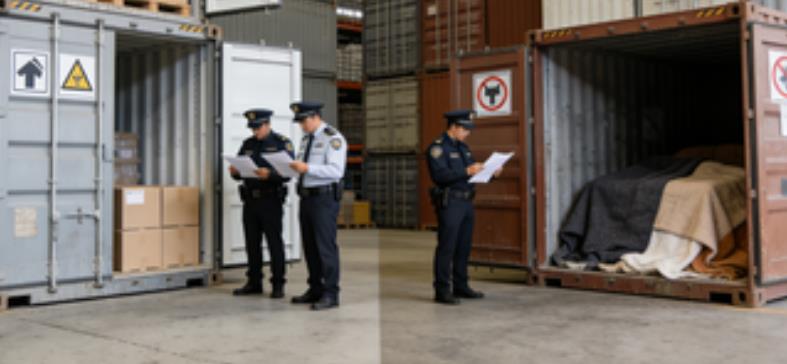
It’s a crisp Tuesday morning, and my phone buzzes with a frantic call from a client, Alex. He’s an importer of solar panels who thought he’d outsmarted CBP by shipping Chinese-made panels through Vietnam—swapping labels and paying a small fee to a local warehouse to “process” them. Now, his entire $400,000 shipment is seized, and he’s facing a 40% punitive tariff plus $1.2 million in fines (300% of the evaded duties) . “I thought it was just a label change,” he pleads. “Why is this such a big deal?” I sigh, because I’ve heard this story too many times. Three years ago, a friend’s furniture business collapsed after CBP caught them “washing” Chinese goods through Malaysia—no real processing, just repackaging. They lost $800,000 in inventory and faced criminal charges that ruined their reputation.
This guide isn’t just a list of do’s and don’ts—it’s the hard-learned truth about third-country transshipment, drawn from my years of helping importers navigate CBP’s increasingly strict rules. We’re diving into what makes transshipment legal (hint: it’s all about “substantial transformation”), the red lines that guarantee CBP scrutiny (like label-swapping and fake documentation), and real-world examples of businesses that got it right (and those that didn’t). Whether you’re importing electronics, textiles, or industrial parts, this will help you avoid Alex’s fate and use transshipment as a legitimate supply chain tool—not a risky tax dodge.
First, let’s bust the biggest myth: Transshipment itself isn’t illegal. It’s a common logistics practice where goods are routed through a third country for legitimate reasons—consolidating shipments, accessing better shipping routes, or adding value through manufacturing. The problem arises when transshipment is used to “wash” the origin of goods to avoid tariffs. In 2026, CBP is cracking down harder than ever on this practice, with new tools like AI-powered supply chain tracing and a 40% punitive tariff for confirmed illegal transshipment . They’re also targeting high-risk countries—Vietnam, Malaysia, Cambodia, Thailand, and Indonesia—with “every shipment inspected” policies and demands for detailed supply chain documentation . The stakes couldn’t be higher: illegal transshipment now carries criminal penalties, including jail time for executives, thanks to the proposed Protecting American Industry and Labor from International Trade Crimes Act .
Legal Transshipment: The “Substantial Transformation” Rule
The line between legal and illegal transshipment boils down to one critical concept: “substantial transformation.” Under U.S. law (outlined in the Tariff Act of 1930 and 19 CFR Part 134), a product’s origin is determined by where it undergoes a “substantial transformation”—a change that alters the product’s character, form, function, or use . If goods are processed in a third country to the point where they’re essentially a new product, their origin becomes that third country, and they qualify for its tariff rates. If not—if it’s just repackaging, relabeling, or minor assembly—CBP will look through the “transshipment veil” and apply the original country’s tariffs.
I have a client, Maya, who runs a small electronics company that imports smartphone chargers. She used to source fully assembled chargers from China, paying a 25% tariff. Now, she imports Chinese-made circuit boards and components to Mexico (a USMCA partner), where a local factory assembles them into chargers, adds Mexican-made cables, and tests each unit. This isn’t just minor assembly—each charger is built from scratch in Mexico, with 45% of its value coming from Mexican components (meeting USMCA’s regional value content requirement) . The result? Her chargers are now considered Mexican-origin, so she pays just 2.5% tariff instead of 25%. CBP has audited her twice, and each time, she provided production records, component invoices, and factory photos proving the substantial transformation—her claims were upheld, and she saved $120,000 in tariffs last year.
Another example: A furniture importer I work with sources raw wood from Canada, ships it to Vietnam for milling and upholstery with Vietnamese fabrics, then exports the finished sofas to the U.S. The wood is just a raw material—Vietnam’s processing turns it into a complete, usable product. Since the sofas undergo substantial transformation in Vietnam, they’re classified as Vietnamese-origin, avoiding Canada’s higher tariffs on finished furniture. The key here is that the third country isn’t just a stopover—it’s where the product is actually made.
Legal transshipment also requires legitimate business reasons beyond tariff avoidance. Maybe you’re consolidating shipments to save on freight costs, or accessing a third country’s distribution network to reach U.S. customers faster. A clothing brand I know ships fabric from Italy to Honduras (a CAFTA-DR partner) for cutting and sewing, then to the U.S.—this isn’t just about tariffs; Honduras offers lower labor costs for assembly, and CAFTA-DR’s preferential rates are a bonus. CBP looks favorably on transshipment that makes logistical or economic sense, not just tariff evasion.
CBP’s Red Lines: Illegal Transshipment Practices That Get You Busted
CBP has a growing list of “red flags” that trigger investigations, and if you cross any of these, you’re asking for trouble. These practices are so common—and so easy for CBP to detect—that they’re essentially suicide for your business. Let’s break down the biggest red lines with real horror stories.
First, label-swapping or fake origin certificates. This is the most obvious red flag: taking Chinese goods, peeling off the “Made in China” label, and slapping on “Made in Vietnam” without any processing. Alex (the solar panel importer) did this—he paid a Vietnamese warehouse $5 per panel to repackage them in Vietnamese boxes and issue fake origin certificates. What he didn’t know is that CBP now works with foreign customs agencies to verify origin claims—they contacted Vietnamese customs, who confirmed the warehouse had no solar panel production capacity . CBP also used blockchain to trace the panels’ components back to a Chinese manufacturer. The result: seized goods, $1.2 million in fines, and a 5-year ban from importing to the U.S.
Second, minor assembly or “token processing”. CBP sees right through “processing” that doesn’t change the product—like screwing two parts together, adding a sticker, or repackaging. A Texas company recently paid $1.24 million in fines for shipping Chinese steel pipes to Mexico, where workers just attached Mexican-made flanges (a minor component) and called them Mexican-origin . The pipes were still essentially Chinese—no substantial transformation—and CBP hit them with back tariffs plus penalties. I had a client who tried to import Chinese-made blenders to Malaysia for “final testing” (turning them on for 30 seconds) before shipping to the U.S. CBP rejected the Malaysian origin claim, stating the testing didn’t alter the product’s character—he had to pay $45,000 in back tariffs.
Third, inconsistent documentation. CBP now requires “three levels of supply chain traceability”: production flowcharts, raw material invoices, and factory operation records . If your documents don’t match—e.g., your origin certificate says 1,000 units were made in Vietnam, but the factory’s energy bills show no increase in production—you’ll get flagged. A Korean company was caught shipping Chinese electronics through South Korea with fake invoices that inflated the value of Korean components . CBP cross-referenced the invoices with the factory’s actual purchases and found the fraud—they seized $2.3 million in goods and filed criminal charges.
Fourth, transshipping through high-risk countries with no business reason. If you’re shipping from China to the U.S. via Vietnam but have no manufacturing, distribution, or logistical ties to Vietnam, CBP will ask why. A New York importer shipped Chinese toys to Cambodia (a high-risk country) for no reason other than to avoid tariffs—no processing, no consolidation, just a quick stopover . CBP flagged the unusual route, traced the toys back to China, and imposed a 40% punitive tariff plus $300,000 in fines.
Fifth, sudden changes in trade patterns. If you’ve always imported directly from China, then overnight switch to importing the same product from Vietnam with no explanation, CBP will investigate. A California clothing brand did this—they went from 100% Chinese imports to 100% Vietnamese imports in one month, with the same product design, packaging, and pricing . CBP found that the “Vietnamese” goods were just Chinese goods with new labels—they seized $1.8 million in inventory and banned the brand from importing for 3 years.
How to Prove Your Transshipment Is Legal (CBP-Approved Documentation)
If you’re engaging in legal transshipment (with substantial transformation), you need to prove it to CBP—talk is cheap, but documentation is gold. Here’s the paperwork you need to have ready, based on what CBP actually asks for in audits.
First, production records from the third-country factory. This includes detailed flowcharts showing every step of the manufacturing process in the third country—from raw materials to finished product. Maya (the electronics importer) provides CBP with photos and videos of her Mexican factory assembling chargers, along with time logs showing how long each production step takes. She also includes quality control reports proving the products are tested in Mexico. CBP wants to see that the processing is real, not just a charade.
Second, raw material invoices and supply chain traceability. You need to show where the components come from and how much value they add in the third country. For example, if you’re making furniture in Vietnam, provide invoices for Vietnamese fabrics, local labor costs, and any other third-country components. The furniture importer I work with keeps records of all their Vietnamese suppliers, including factory addresses and contact information, so CBP can verify the components are actually sourced there. They also provide proof of payment to show they’re not just “renting” a factory’s name.
Third, origin certificates issued by the third country’s government. Not just any certificate—you need one from an authorized government agency (like Vietnam’s Ministry of Industry and Trade or Mexico’s Secretaría de Economía) that verifies the product meets the country’s origin rules. Fake certificates are easy to spot—CBP cross-references them with government databases and will contact the issuing agency to confirm validity. Maya’s Mexican factory provides her with Certificates of Origin approved by Mexico’s government, which CBP has verified multiple times.
Fourth, business records proving legitimate reasons for transshipment. If you’re transshipping to consolidate shipments, provide freight quotes showing cost savings. If you’re using a third country’s distribution network, provide contracts with local distributors. The clothing brand that ships to Honduras provides CBP with labor cost comparisons showing that Honduras is cheaper for assembly than China, along with CAFTA-DR trade agreements proving preferential tariff eligibility. CBP wants to see that transshipment is part of a legitimate business strategy, not just tariff evasion.
Real-World Examples: Legal Wins vs. Illegal Disasters
Let’s compare two stories to see the difference between legal and illegal transshipment—and the consequences of each.
Legal Win: Maya’s Smartphone Chargers
Maya imports Chinese circuit boards to Mexico, where they’re assembled into chargers with Mexican cables and tested. Key details:
- Substantial transformation: The circuit boards are just components—Mexico’s assembly and testing turn them into finished chargers.
- Documentation: She provides production flowcharts, component invoices (45% Mexican value), government-issued origin certificates, and factory photos.
- Legitimate business reason: Lower labor costs in Mexico plus USMCA preferential tariffs.
- Outcome: Pays 2.5% tariff instead of 25%, saves $120,000/year, passes two CBP audits with no issues.
Illegal Disaster: Alex’s Solar Panels
Alex ships fully assembled Chinese solar panels to Vietnam, repackages them, and issues fake origin certificates. Key details:
- No substantial transformation: The panels are unchanged—just relabeled and repackaged.
- Documentation: Fake origin certificates, no production records from Vietnam (since no processing occurred).
- No legitimate business reason: The only purpose is to avoid China’s 25% tariff.
- Outcome: Seized $400k shipment, $1.2M fines (300% of evaded duties), 40% punitive tariff, 5-year import ban.
Another illegal disaster: A Florida importer of steel pipes shipped Chinese pipes to Malaysia for minor welding (token processing) before sending to the U.S. CBP found that the welding didn’t change the pipes’ function or character—they were still Chinese-origin. The importer faced $800k in back tariffs, $2.4M in fines, and criminal charges for fraud. Their business closed within 6 months.
How to Stay Compliant: CBP’s 2026 Rules for Transshipment
CBP’s rules for transshipment are evolving rapidly, but there are steps you can take to stay compliant in 2026.
First, avoid “wash” countries. If a third country has no real manufacturing capacity for your product (e.g., Cambodia can’t produce high-tech electronics at scale), don’t try to claim it as origin. CBP has lists of high-risk countries and products—check them before planning your supply chain.
Second, invest in real processing, not token changes. If you’re going to transship, make sure the third country adds real value. This doesn’t mean you have to build a factory—partner with an existing manufacturer in a country with a free trade agreement (like Mexico, Honduras, or Canada) to handle substantial processing.
Third, document everything. Keep copies of all production records, component invoices, origin certificates, and business contracts. Store them digitally (CBP accepts electronic documents) and make them easily accessible—you’ll need them for audits.
Fourth, get a pre-ruling from CBP. If you’re unsure if your transshipment is legal, file for a Binding Ruling (CBP Form 734) . This is an official decision from CBP on your product’s origin, and it’s binding for 4 years. Maya did this before switching to Mexican production—CBP ruled her chargers were Mexican-origin, so she had peace of mind during audits.
Fifth, work with a customs broker who specializes in transshipment. A good broker knows CBP’s latest rules, can help you navigate documentation, and will warn you if your plan is risky. Alex didn’t use a broker—he trusted a Vietnamese warehouse that promised “easy label changes.” A specialist broker would have told him his plan was illegal and helped him find a legitimate solution.
Final Thoughts: Transshipment Is a Tool, Not a Loophole
The biggest mistake importers make is seeing transshipment as a shortcut to avoid tariffs. Legal transshipment is about building a legitimate supply chain that adds value, not gaming the system. CBP’s 2026 rules make it clear: they have the tools to trace your supply chain, verify origin claims, and punish fraud—hard.
Alex’s story is tragic, but it’s preventable. He skipped the hard work of finding a legitimate manufacturing partner, ignored the importance of documentation, and trusted a scheme that was too good to be true. Maya, on the other hand, invested in real processing, documented everything, and worked with experts—she’s reaping the rewards of compliance.
If you’re considering third-country transshipment, ask yourself: Am I doing this to add value or just to avoid tariffs? If it’s the latter, think twice—CBP will catch you. If it’s the former, invest in substantial transformation, document every step, and get CBP’s blessing (via a pre-ruling) if you’re unsure.
In 2026, compliance isn’t optional—it’s the only way to stay in business. Transshipment can be a powerful tool to reduce costs and improve your supply chain, but only if you use it legally. Cut corners, and you’ll face fines, seized goods, and criminal charges. Do it right, and you’ll build a resilient, profitable business that can weather any trade storm.
So the next time you’re tempted to “wash” goods through a third country, remember Alex’s $1.2 million mistake. The risk isn’t worth it. Instead, follow Maya’s lead: invest in real processing, document everything, and stay compliant. Your bottom line—and your freedom—will thank you.
Here’s to legitimate supply chains and stress-free importing in 2026!
Leave a Reply