
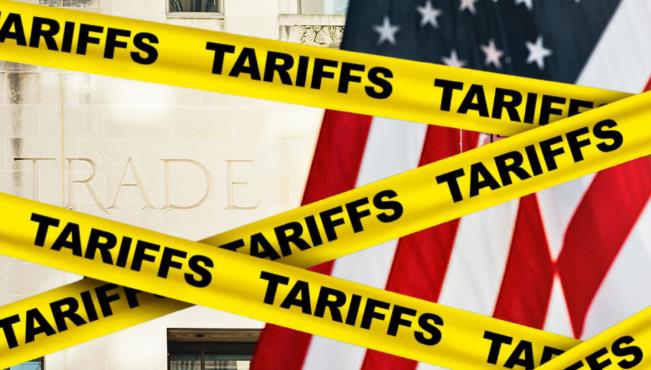
Since early 2025, the global trade landscape has faced one of the sharpest disruptions in decades due to massive re-imposition and escalation of U.S. tariffs. While the official rationale emphasizes protecting domestic manufacturing and correcting trade imbalances, the broader economic reverberations are now becoming clear, and for many businesses, supply chains, and consumers worldwide, these changes are forcing painful readjustments. From the perspective of a finance and trade policy professional, this is not simply a tactical tariff increase; it is a structural reshaping of global value chains, investor expectations, and the logic of international commerce. The pressing question is whether this shake-out will create a more resilient trade architecture or trigger a long-term cycle of inefficiency, inflation, and economic instability.
At the center of this disruption lies the U.S. administration’s new reciprocal tariff framework, which raises baseline import duties across a wide range of manufactured goods, including electronics, apparel, furniture, industrial components, and more. These sweeping increases have already caused significant collateral damage: global supply chains are being scrambled, trade volumes are contracting, and companies highly integrated in international networks are experiencing sharp output declines. When tariffs spike abruptly, the landed cost of imported inputs and finished goods rises dramatically. Firms reliant on complex, multi-country supply chains face sudden cost inflation, inventory disruptions, and the need to rewrite sourcing and pricing strategies. Many are left with three unappealing options: absorb higher costs and accept lower margins, pass costs to customers, or scramble to find alternative suppliers, which often adds both expense and logistical complexity.
In the short term, some firms have mitigated the impact by shifting production to alternative manufacturing bases, stockpiling inventories ahead of tariff deadlines, or altering logistics routes to bypass affected goods. However, these stop-gap measures are becoming increasingly unsustainable. Even businesses leveraging digital-enabled supply-chain visibility and risk management report only marginal resilience, with many expecting serious disruptions well into late 2025 and 2026. In an interconnected global economy, tariff shocks propagate not only through trade flows but also through financial, logistical, and production networks that cannot be reconfigured overnight.
Beyond corporate costs, there are significant macroeconomic implications. Analysts estimate that the cumulative effect of 2025 tariffs could reduce global trade volumes by nearly 9% under a full-implementation scenario. For the U.S. economy, this translates into higher consumer prices, squeezed profit margins, rising input costs, and slower growth. Domestic firms dependent on imported components are particularly vulnerable, and consumers face increased costs for everyday goods. The logic of “protect domestic industry through tariffs” risks backfiring, as the very firms intended to benefit face escalating expenses, while households bear the burden through higher prices.
Supply-chain stability and predictability are also at risk. When trading partners face volatile costs and unpredictable policy shifts, businesses naturally respond by diversifying suppliers, increasing inventory buffers, and shortening production cycles. While this can improve resilience in theory, it comes at a high cost: higher inventory carrying costs, reduced just-in-time efficiency, and diminished economies of scale. Industries with deeply integrated global value chains, such as electronics, automotive parts, and industrial machinery, are particularly affected, while sectors with simpler, localized supply chains experience less disruption.
From a trade finance perspective, capital allocation and investment patterns are already shifting. Firms that once invested heavily in long-term global production networks are re-evaluating risk models. Some are pausing expansion projects, others are reallocating production closer to home, and many now treat geopolitical and tariff risk as a fixed cost rather than a temporary shock. These adjustments impact corporate balance sheets, employment, regional economic development, and the broader investment landscape over the next decade.
Consider the example of a major global furniture retailer faced with soaring costs for imported sofas and bookcases. In response, the company is ramping up domestic production facilities, reversing years of offshoring and cost arbitrage. The decision is not driven solely by cost efficiency but by regulatory stability, tariff avoidance, and supply-chain control. Domestic production entails higher labor costs, capital expenditure, and potentially lower margins, yet it offers greater resilience against tariff volatility. Such cases illustrate a structural shift away from global outsourcing toward regional or domestic manufacturing clusters, signaling the early stages of supply-chain regionalization.
This regionalization has broader implications for global trade. Firms may increasingly organize supply chains around regional blocks — North America, Europe, Southeast Asia — rather than across continents. While this reduces some risks, including currency fluctuations, border delays, and long-haul logistics challenges, it also diminishes the gains from comparative advantage, potentially raising costs and consumer prices worldwide. Tariffs function effectively as taxes on imported goods, and when supply chains reconfigure, cost increases are often passed to consumers, creating inflationary pressure. Certain sectors, such as household goods, electronics, and furniture, are already experiencing price hikes, reducing purchasing power for middle- and lower-income consumers and dampening overall demand.
The policy justification for these tariffs — protecting domestic manufacturing, reducing trade deficits, and asserting geopolitical leverage — appears increasingly tenuous given the mounting collateral damage. Historical evidence shows that protectionist tariffs may provide short-term political benefits but often undermine long-term competitiveness, especially in economies deeply integrated into global networks. The unpredictability of policy shifts exacerbates systemic risk: companies cannot make long-term investment decisions when tariffs and trade rules can change abruptly. This uncertainty can depress capital formation, deter innovation, and incentivize short-term survival strategies over long-term growth.
Despite these challenges, there is a potential upside. The disruptions force businesses to rethink globalization, moving away from ultra-optimized, cost-minimizing models toward more flexible, modular supply chains. Combining domestic production with regional suppliers, adopting digital supply-chain tools, and building redundancy and agility could foster a new type of resilient globalization. Firms that act early by investing in supply-chain visibility, diversifying sourcing, and hedging against currency and tariff risk may emerge stronger. However, this comes at the cost of higher operational expenses, lower margins, and a less efficient global trade system overall.
For policymakers, the challenge is substantial. If tariffs are to remain a tool for domestic protection, it is critical to recognize the trade-offs: inflation, reduced competitiveness, fragile supply chains, and potential global economic slowdown. The only sustainable approach involves complementing tariffs with strategic industrial policies: investment in domestic manufacturing, workforce development, supply-chain infrastructure, incentives for innovation, and measures to offset consumer costs. Without such measures, the economic burden disproportionately affects small businesses and consumers, exacerbating inequality and undermining long-term growth.
From a strategic standpoint, the current period marks a crossroads. The era of low-tariff globalization may be ending, not because international trade is obsolete, but because it is being re-politicized, re-risked, and re-priced. Businesses, investors, and policymakers must recalibrate expectations. The relevant question is not how to return to the pre-2025 world but how to construct a trade system that accommodates heightened political risk, supply-chain fragmentation, and regulatory volatility.
The choices made in this period will shape the next decade of global commerce. If approached with foresight, we could develop a resilient, diversified, and stable trade architecture, though it may be less efficient than the pre-2025 model. If managed short-sightedly, the outcome could be fragmentation, inflation, and slow growth. For businesses and investors paying attention now, decisive action is essential: re-evaluating supply chains, hedging against policy shifts, and embracing regional and domestic production are no longer optional strategies but necessities.
The long-term lesson of the 2025 tariff shifts is clear: globalization is not ending, but it is evolving. The new landscape favors resilience over hyper-efficiency, regional stability over global optimization, and strategic foresight over short-term cost minimization. The firms and policymakers that recognize this reality and act accordingly will not only survive but could redefine competitiveness for the next generation of international commerce. Those who ignore it risk being left behind as the global trade order recalibrates itself in response to the disruptive force of U.S. tariffs, signaling a new era in which agility, foresight, and strategic planning determine success more than ever before.
Leave a Reply